+86-182-5320-5956 / +86-138-5324-2059 +86-153-7689-5956 / +86-189-5326-2457
Email: info@eonmach.com sales@eonmach.com
Views: 3 Author: Site Editor Publish Time: 2026-03-31 Origin: Site


Have you ever wondered how machines control their movements? Directional control valves play a crucial role in hydraulic and pneumatic systems. Understanding their symbols is essential for anyone working with these systems.
In this article, we’ll explore the basics of directional control valves and why they matter. You’ll learn how to read and interpret their symbols, making it easier to design and troubleshoot hydraulic systems. Get ready to enhance your skills and confidence in working with directional control valves!
A directional control valve is a vital component in hydraulic and pneumatic systems. Its primary function is to control the flow of fluid or air, directing it to various parts of a machine or system. This control is essential for achieving precise movements in equipment.
Key Functions:
Regulating the flow direction of fluids.
Controlling the start and stop of actuators.
Managing the speed of movement in hydraulic systems.
These valves find applications across various industries. For instance:
Manufacturing: Used in automated assembly lines to control robotic arms.
Automotive: Essential for operating brakes and steering systems.
Agriculture: Controls hydraulic systems in tractors and other farming equipment.
Directional control valves come in several types, each suited for specific applications. Here’s a quick overview:
Type | Description |
2/2-way | Two ports, two positions; used for simple on/off control. |
3/2-way | Three ports, two positions; often used for single-acting cylinders. |
4/2-way | Four ports, two positions; typically controls double-acting cylinders. |
5/2-way | Five ports, two positions; allows for more complex operations. |
Single-acting vs. Double-acting Cylinders:
Single-acting cylinders use one port to extend and rely on a spring or gravity to return. They are simpler and often lighter.
Double-acting cylinders utilize two ports to control both extension and retraction, providing more power and control.
Directional control valves are not just components; they are the backbone of various systems. Their versatility allows them to adapt to numerous applications, enhancing efficiency and performance.
Applications include:
Construction Equipment: Operating hydraulic lifts and excavators.
Robotics: Providing precise control in robotic arms for assembly tasks.
Textile Machinery: Regulating fabric movement during production processes.
Benefits:
Improved efficiency in operations.
Enhanced control over machinery.
Increased safety through reliable operation.
Incorporating brands like Hafner-Pneumatik into your system can ensure high-quality components that meet industry standards. Their valves are designed to provide reliability and performance, making them a trusted choice in the market.
Understanding how these valves work and their applications can significantly impact your projects. Whether you're designing a new system or troubleshooting an existing one, knowing the ins and outs of directional control valves will empower you to make informed decisions.
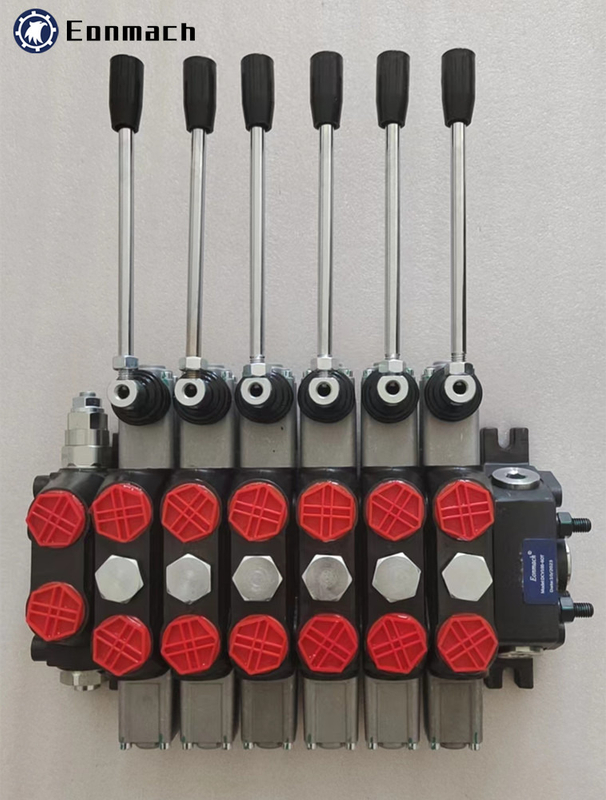
ISO symbols are standardized graphics used to represent components in hydraulic and pneumatic systems, particularly directional control valves. These symbols ensure that engineers and technicians can communicate effectively across different languages and regions. The International Organization for Standardization (ISO) sets these standards, making it easier for professionals to understand complex systems at a glance.
Why Standardization Matters:
Clarity: Standardized symbols eliminate confusion. When everyone uses the same symbols, it reduces the risk of errors in design and implementation.
Efficiency: Engineers can quickly interpret diagrams and schematics, speeding up the design process.
Safety: Clear communication through symbols minimizes the chance of operational mistakes, enhancing safety in the workplace.
ISO symbols for directional control valves have specific features that convey essential information about the valve's function. Understanding these features is crucial for anyone working in engineering or design.
Symbol Characteristics:
Shapes and Lines: Each shape represents a different component, while lines indicate flow paths. For instance, a rectangle often represents the valve body, while arrows show the direction of fluid flow.
Position Indicators: The number of squares in the symbol indicates the number of valve positions. This helps users understand how many different states the valve can operate in.
Port Designations: Each port in the symbol is labeled, typically using letters like P (pressure), A (actuator), and T (tank). This labeling clarifies the function of each port.
Effective Communication: Understanding these symbols is vital for clear communication among engineers. For example, when discussing a hydraulic system, referring to the ISO symbol allows everyone to visualize the design without ambiguity.
Eonmach, a company specializing in hydraulic systems, adheres to ISO9001 standards, ensuring that their products are reliable and meet industry expectations. Their commitment to quality management reflects the importance of using standardized symbols in their designs. By following these standards, Eonmach enhances safety and efficiency in their operations.
Feature | Description |
Shapes | Different shapes represent specific components. |
Flow Lines | Arrows indicate the direction of fluid flow. |
Position Indicators | Number of squares shows how many positions exist. |
Port Designations | Letters indicate the function of each port. |
Understanding ISO symbols not only helps in reading diagrams but also ensures that everyone involved in a project is on the same page. This shared knowledge leads to better collaboration and more successful outcomes in engineering projects involving directional control valves.
Understanding the basic structure of directional control valve symbols is essential for anyone working with hydraulic or pneumatic systems. These symbols are made up of several components, each serving a specific purpose.
Components of a Symbol:
Squares: Represent the valve body. The number of squares indicates how many positions the valve can take.
Lines: Show the flow paths within the valve. Solid lines typically represent active paths, while dashed lines indicate potential paths.
Arrows: Indicate the direction of fluid flow. The orientation of arrows helps you visualize how the fluid moves through the system.
To identify the number of positions and ports:
Count the squares to determine the number of operational positions.
Each port is typically represented by an opening in the squares. For example, a 4/2 valve has four ports and two operational positions.
Flow direction is a critical aspect of understanding how a directional control valve functions. The arrows in the symbols play a vital role in this interpretation.
Significance of Arrows:
Directionality: Arrows point in the direction the fluid will travel. This clarity is crucial for system design.
Flow Control: Properly interpreting these arrows helps ensure that the fluid reaches its intended destination without causing backflow or pressure issues.
Understanding flow paths is essential for designing efficient systems. For instance, if you misinterpret the flow direction, it can lead to equipment failure or safety hazards.
Each port in a directional control valve symbol has a designated function. Recognizing these functions is key to understanding how the valve operates within a system.
Common Port Designations:
P (Pressure): The inlet for pressurized fluid.
A (Actuator): The port that connects to the actuator, driving the system's movement.
B (Return): The port where fluid exits the actuator and returns to the reservoir.
T (Tank): The port for fluid to drain back into the tank.
Interpreting Port Functions:
The position of each port in relation to the valve body helps clarify its specific role. For example, in a 4/2 valve, the pressure port (P) is usually located opposite the tank port (T), ensuring efficient fluid flow.
Port Designation | Function |
P | Pressure inlet for hydraulic fluid |
A | Connects to the actuator for movement |
B | Returns fluid from the actuator |
T | Drains fluid back to the tank |
By grasping these components and their functions, you’ll be better equipped to read and interpret directional control valve symbols. This knowledge is invaluable for anyone involved in designing or maintaining hydraulic systems.
The 2/2-way valve symbol is one of the simplest in hydraulic systems. It consists of two ports and two positions, making it ideal for basic on/off control.
Symbol Breakdown:
Two Squares: Represent the valve body.
Two Ports: Typically labeled as P (pressure) and A (actuator).
Applications:
Pneumatic Systems: Used to control air flow in tools.
Hydraulic Circuits: Common in applications like clamping devices and simple actuators.
This simplicity makes the 2/2-way valve a popular choice in various industries, where straightforward control is essential.
The 3/2-way valve symbol adds complexity by introducing an additional port, allowing for more versatile control. This valve can be configured as either normally open or normally closed.
Symbol Breakdown:
Three Ports: Labeled as P (pressure), A (actuator), and R (return).
Two Positions: Indicate the flow direction depending on the valve's state.
Normal Configurations:
Normally Closed: Fluid flows from P to A when activated, blocking R.
Normally Open: Fluid flows from P to R when not activated, allowing A to be blocked.
These configurations are crucial for applications requiring specific flow paths, such as in automation systems.
The 4/2-way and 5/2-way valve symbols are designed for more complex operations, typically found in double-acting cylinders. These symbols help manage multiple flow paths effectively.
4/2-Way Valve:
Four Ports: P (pressure), A (actuator), B (second actuator), and T (tank).
Two Positions: Control flow to two actuators.
5/2-Way Valve:
Five Ports: Similar to the 4/2-way but provides additional control options.
Two Positions: Allows for more complex operations, such as controlling multiple actuators simultaneously.
Importance of Exhaust Ports:
Exhaust ports play a critical role in managing fluid return.
They help maintain system pressure and prevent back pressure, which can lead to inefficiencies or damage.
Valve Type | Ports | Positions | Key Features |
2/2-way | 2 | 2 | Basic on/off control |
3/2-way | 3 | 2 | Can be normally open or closed |
4/2-way | 4 | 2 | Controls two actuators |
5/2-way | 5 | 2 | More complex operations possible |
Understanding these symbols is crucial for anyone working with directional control valves. By familiarizing yourself with these common configurations, you can enhance your ability to design and troubleshoot hydraulic systems effectively.

Mechanically actuated valves are controlled by physical actions, such as levers or push-buttons. These symbols are straightforward and indicate the method of actuation clearly.
Common Symbols:
Lever: Represented by a triangle or an angled line, indicating manual control.
Push-button: Shown as a circle or square, suggesting a simple push to activate.
Differences in Mechanisms:
Spring Reset: This mechanism returns the valve to its original position when released. The symbol often includes a spring icon, indicating that the valve will revert automatically.
Non-Reset Mechanisms: These valves stay in the last position until another actuation occurs. Their symbols do not include a spring representation, emphasizing a more permanent state until manually reset.
These mechanical actuation methods are common in applications where immediate and direct control is necessary, such as in assembly lines or machinery operations.
Pneumatic and electric actuation methods offer more advanced control options for directional control valves. Each has its own unique symbols that convey specific information about their operation.
Pneumatic Actuation Symbols:
Symbols for pneumatic valves often include a circle with arrows indicating air flow direction.
They may also feature specific notations for pressure levels, which are crucial for ensuring proper operation in systems relying on compressed air.
Electric Actuation Symbols:
Solenoid-operated Valves: Represented by a coil symbol, indicating that the valve is activated by an electric current. The coil symbol is typically shown alongside the valve symbol.
These valves can be depicted with arrows illustrating the direction of flow when the solenoid is energized.
Actuation Method | Symbol Features | Description |
Mechanical | Lever or push-button symbols | Manual control through physical actions |
Pneumatic | Circle with arrows and pressure notations | Air-operated valves for fluid control |
Electric (Solenoid) | Coil symbol with flow direction arrows | Electrically activated valves for precise control |
Understanding these actuation methods is essential for interpreting directional control valve symbols effectively. Whether you are designing a new system or troubleshooting an existing one, knowing how to read these symbols can greatly enhance your operational efficiency.
Understanding directional control valve symbols is crucial for effective system design. These symbols simplify complex information, ensuring clarity in communication.
By practicing reading these symbols, you can enhance your skills and improve operational efficiency.
Take the time to explore real-world applications. This hands-on experience will deepen your understanding and confidence in using directional control valves.