
Views: 10 Author: Site Editor Publish Time: 2026-08-04 Origin: Site


Automated mechanical parking presents a formidable engineering challenge. These stereo garages must safely and consistently move multi-ton vehicles. They operate in highly confined spaces. A single mechanical failure can lead to catastrophic damage. Industrial automation experts continuously debate actuation methods. They weigh the merits of fluid power against air power. Choosing the right actuation method directly impacts safety compliance. It also dictates your long-term maintenance overhead. The Stereo Garage Cylinder serves as the heart of these complex vertical lifting mechanisms.
We will evaluate both hydraulic and pneumatic systems objectively. We base this evaluation purely on their mechanical viability. We also examine their cost-efficiency and physical limits within automated parking applications. You will learn which system best handles heavy dynamic loads. We will also explore why specific engineering choices protect your investment. By the end, you will understand how to optimize your garage architecture effectively.
Hydraulic Supremacy for Lifting: Hydraulic cylinders are the industry standard for primary vertical lifting in stereo garages due to fluid incompressibility and high load-bearing capacities.
Pneumatic Limitations: While pneumatic systems offer cleaner and faster actuation, air compressibility makes them unsuited for stabilizing 2,000kg+ dynamic vehicle loads, restricting them to secondary mechanisms (e.g., locking pins).
Total Cost of Ownership (TCO): Hydraulic systems require higher upfront investment and strict leak-management protocols, but offer superior long-term ROI for heavy-duty cycle requirements.
Safety First: Replacing a hydraulic system with a pneumatic one for primary load-bearing introduces catastrophic failure risks.
Engineers design stereo garages to maximize urban parking density. This goal introduces intense operational demands. A standard passenger SUV often weighs over two tons. The lifting mechanism must support this massive payload repeatedly. It must also position the vehicle with millimeter precision. The machinery operates continuously across multiple shifts. Furthermore, these systems endure harsh environmental variables daily.
Operators cannot compromise on system demands. The chosen cylinder must provide absolute holding power. We call a slow, unintended movement "drift." Drift occurs when a cylinder creeps under heavy load. A creeping platform can crush a vehicle. It can also endanger human users below. Absolute holding power prevents drift entirely.
Prioritize specific metrics during your evaluation phase. Sheer actuation speed matters less in automated parking. Instead, prioritize holding force and drift resistance. These two factors ensure strict regulatory compliance. They also lower your liability risks significantly. A fast cylinder offers no value if it cannot hold a suspended load securely.
Payload Capacity: Must handle dynamic loads exceeding 3,000 kilograms.
Precision Positioning: Platforms must align perfectly for safe vehicle transfer.
Continuous Duty: Systems endure hundreds of operational cycles daily.
Environmental Resilience: Components face extreme temperature swings and humidity.
Fluid power dominates heavy industrial lifting. Pressurized oil drives these robust systems. Oil possesses a defining physical trait. It resists compression almost entirely. You apply mechanical pressure to the fluid. The fluid transfers this exact force to the piston. This direct energy transfer defines the Hydraulic Cylinder.
This incompressibility explains why fluid power wins in automated parking. A hydraulic system delivers massive force density. It achieves this within a highly compact footprint. Stereo garages severely restrict available mechanical space. Engineers need maximum lifting capability packed into minimal dimensions. Fluid power meets this exact structural requirement perfectly.
Predictable control ensures user safety above all else. Hydraulic systems hold suspended vehicles precisely in place. Specialized locking valves trap the pressurized oil securely. The platform remains stationary even during a total power failure. The incompressible fluid acts as a solid mechanical pillar.
You must plan your architecture carefully early on. These systems require dedicated structural space. You need room for the hydraulic power unit (HPU). You also must accommodate the necessary fluid reservoirs. Architects must factor these footprints into the initial garage blueprints.
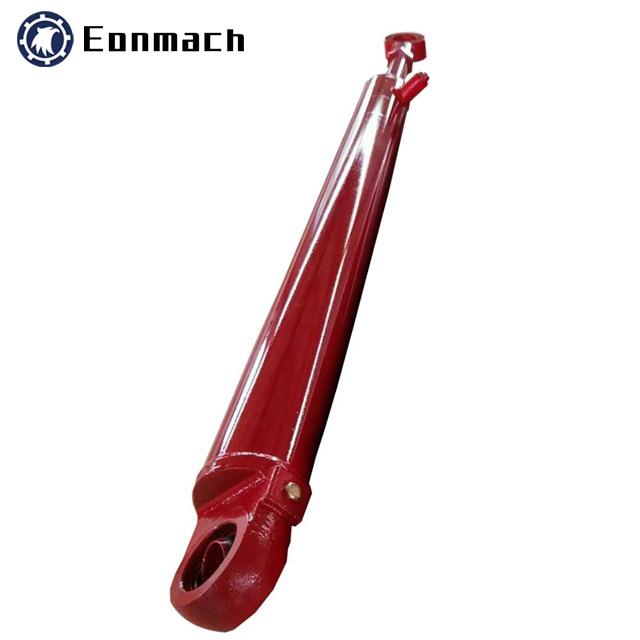
High-performance hydraulic cylinder designed for heavy-duty stereo garage lifting applications.
Pneumatic automation relies on compressed air. Air behaves very differently from oil. Air is highly compressible by nature. It acts exactly like a mechanical spring under heavy loads. You push compressed air into a chamber. The air shrinks before it moves the piston. This fundamental physical limitation changes everything.
We must clarify where pneumatics actually belong. Air systems excel in high-speed manufacturing environments. They handle low-load automation perfectly. You can use them inside stereo garages for specific tasks. They actuate secondary safety latches efficiently. They operate entry gates and trigger limit switches. They serve auxiliary functions very well.
Consider the dangerous "what-if" scenario. Imagine using compressed air to lift a car. The heavy load compresses the air unpredictably. The lifting platform responds with a spongy, bouncing motion. The system requires dangerously extreme air pressure levels. A burst airline would cause a catastrophic, sudden drop. You must never use air for primary vehicle lifting.
A side-by-side evaluation clarifies the optimal use cases. The matrix below contrasts the two actuation methods. We compare them across crucial engineering and operational metrics.
Evaluation Metric | Hydraulic Systems | Pneumatic Systems |
|---|---|---|
Load Capacity | Excellent (Easily lifts 3,000kg+) | Poor (Unsuitable for heavy vehicles) |
Positioning Precision | High (Zero spongy movement) | Low (Air compresses like a spring) |
Maintenance Needs | High (Fluid checks, seal replacements) | Low (Filter changes, simple lubrication) |
Leakage Risks | High (Oil spills require containment) | Low (Harmless air leaks into atmosphere) |
Upfront Cost | High (Expensive HPU and reservoirs) | Low (Cheaper initial components) |
Operational costs look different over a decade. Fluid power requires a higher initial investment. You must also fund ongoing fluid maintenance. However, air systems waste massive amounts of electricity. Pneumatic compressors run continuously to maintain line pressure. This rampant energy inefficiency heavily penalizes long-term budgets.
Environmental factors dictate specific facility designs. Fluid leaks present serious contamination risks. You must install drip pans and containment protocols. Air cylinders operate cleanly by comparison. A leaking air hose simply vents ambient air. Cleanliness makes air ideal for delicate manufacturing, but not for heavy lifting.
Always calculate your long-term energy consumption accurately. Do not let cheaper initial air components fool you. Inefficient air compressors negate those early savings quickly. Efficient fluid power units save money across thousands of heavy lifting cycles.
Temperature fluctuations impact heavy machinery severely. Extreme winter conditions thicken operational oils. High fluid viscosity forces pumps to work harder. You may need to install specialized fluid heaters. Conversely, cold weather harms air systems differently. Condensation forms inside pneumatic airlines. This moisture freezes and destroys internal valves.
Maintenance realities catch many facility managers off guard. You must schedule proactive seal replacements frequently. Worn seals lead to catastrophic pressure loss. They also cause expensive environmental contamination. Preventative maintenance prevents sudden garage shutdowns. Neglect always results in stranded vehicles and angry customers.
System integration requires meticulous structural planning. You must route high-pressure hoses safely. These lines weave through moving garage structures constantly. Poor routing creates dangerous pinch points. Rubbing hoses experience excessive external wear. A ruptured line halts the entire automated parking matrix instantly.
Cold Weather Viscosity: Install thermostatic heaters for winter operations.
Seal Degradation: Replace dynamic seals strictly according to cycle counts.
Hose Chafing: Use reinforced abrasion sleeves near moving structural joints.
Procuring the right cylinder requires a rigorous engineering approach. You cannot rely on generic catalog specifications. Automated parking demands absolute precision. Follow this structured framework to ensure safety and performance.
Load Profiling: Calculate the absolute maximum vehicle weight first. Add this figure to the platform tare weight. This combined number dictates your minimum force requirement.
Component Selection: Specify the exact stroke length needed. Determine the correct bore size to handle the load profile. Set the operating pressure to maximize system longevity.
Redundancy Planning: Design fail-safes into the mechanical architecture. Include counterbalance valves for smooth lowering. Install velocity fuses to stop sudden drops. Add mechanical fall-arrest systems for ultimate redundancy.
You must verify all engineering claims independently. Consult directly with Tier-1 component manufacturers. Request specific load-test certifications for your exact application. Standard industrial metrics often fail in continuous parking environments. You need proof of reliability under heavy dynamic strain.
Always request specific durability metrics before procurement. Ask the manufacturer for MTBF (Mean Time Between Failures) data. Review their warranty terms carefully. Ensure the warranty explicitly covers high-cycle automated parking applications. Vague warranty language leaves you legally vulnerable later.
Physics dictates the rules of industrial lifting. Incompressibility makes fluid power the undisputed choice. Hydraulic systems provide the absolute holding force required for stereo garages. Pneumatic systems simply cannot safely stabilize heavy dynamic vehicle loads. You should reserve air power strictly for auxiliary latches and lightweight gates.
Take action to secure your facility today. Audit your current structural designs immediately. Hire a certified fluid power engineer for this review. They will verify your cylinder sizing and validate your safety compliance. Proactive engineering prevents catastrophic mechanical failures tomorrow.
A: No. Lifting a two-ton vehicle requires immense force. A pneumatic system would need a massive bore size to achieve this. It would also require dangerously high air pressures. The compressible nature of air makes the platform unstable and prone to sudden drops. It remains impractical and highly unsafe.
A: Replacement intervals depend heavily on cycle rates and operating temperatures. A general B2B benchmark recommends fluid and seal inspections every 5,000 operating hours. You must always follow the specific manufacturer guidelines. Preventative replacement prevents sudden pressure loss and costly facility downtime.
A: The system utilizes pilot-operated check valves. These mechanical safety valves engage instantly when power fails. They lock the pressurized fluid tightly inside the cylinder chamber. The incompressible oil cannot escape. This mechanism keeps the heavy vehicle safely suspended until engineers restore facility power.