
Views: 13 Author: Site Editor Publish Time: 2026-03-30 Origin: Site


Have you ever thought about how heavy machinery can lift enormous loads so effortlessly? This capability comes from hydraulic cylinders, which transform fluid power into powerful mechanical force. Widely used in construction, manufacturing, and various types of equipment, hydraulic cylinders enable precise and high-strength motion for demanding tasks.
Hydraulic cylinders work by using fluid pressure to create mechanical force and movement. At the core of this process is Pascal's Law, which says that pressure applied to a confined fluid spreads evenly in all directions. Imagine squeezing a balloon filled with water — the pressure you apply is felt everywhere inside the balloon equally. This principle lets hydraulic systems transfer force efficiently.
In a hydraulic cylinder, when pressure is applied to the hydraulic fluid inside the cylinder barrel, that pressure pushes on the piston equally on all sides. Because the fluid is trapped and incompressible, the force is transmitted without loss. If one piston has a larger surface area, the force it produces will be proportionally greater, even though the pressure is the same throughout the fluid. This allows small inputs of force to generate much larger outputs, which is why hydraulic cylinders can lift heavy loads despite their compact size.
Hydraulic fluid, usually oil, is the medium that carries force inside the cylinder. It’s chosen for its incompressibility, lubrication properties, and resistance to temperature changes. When the pump pushes this fluid into one side of the cylinder, it creates pressure that moves the piston. The fluid’s ability to flow smoothly and maintain pressure is critical for the cylinder’s performance. If the fluid leaks or becomes contaminated, the system’s efficiency drops.
Once the pressurized fluid pushes the piston, the piston moves along the cylinder barrel. This movement converts the fluid’s energy into mechanical energy, which can push, pull, or lift loads connected to the piston rod. The force the piston applies depends on two main factors:
Pressure of the fluid: Higher pressure means more force.
Surface area of the piston: A larger piston face means more force for the same pressure.
For example, if a piston has a surface area of 10 square inches and the fluid pressure is 100 psi (pounds per square inch), the piston can exert a force of 1,000 pounds (Force = Pressure × Area).
The piston’s movement can be controlled by directing the fluid to different sides of the piston using valves. This lets the cylinder extend or retract, depending on the task. The precise control of fluid flow and pressure allows hydraulic cylinders to perform smooth, powerful, and repeatable motions in many machines.
Hydraulic cylinders are made up of several important parts, each playing a role in turning fluid pressure into mechanical force. Understanding these components helps explain how cylinders work and how they keep machines moving smoothly.
The cylinder barrel is the main body. It holds the hydraulic fluid under pressure and provides a smooth chamber for the piston to slide inside. Usually made from strong steel, the inside surface is polished to reduce friction and prevent wear on seals and the piston. This smoothness helps keep the system efficient and leak-free.
Inside the barrel is the piston, a solid disc that divides the barrel into two chambers. When pressurized fluid pushes on one side of the piston, it moves, creating mechanical motion. The piston has seals around its edge to stop fluid from leaking between the two chambers. These piston seals are critical because leaks would reduce force and efficiency.
Attached to the piston is the piston rod, which extends outside the barrel. This rod carries the piston’s movement to the machine or load. The rod must be strong and smooth to avoid bending or damaging the seals. It’s often made from hardened steel and polished for durability and to reduce wear on the rod seals.
The cylinder’s ends are closed off by end caps. One end cap usually has an opening for the piston rod to pass through, sealed tightly to prevent fluid leaks. These caps also hold the cylinder together and can include mounting points to attach the cylinder to machinery. They must be strong enough to withstand high pressure inside the barrel.
Seals keep the hydraulic fluid inside and prevent dirt or contaminants from entering. There are several types:
Piston seals: Prevent fluid from crossing between chambers inside the barrel.
Rod seals: Stop fluid from leaking where the rod exits the cylinder.
Wiper seals: Clean the rod as it retracts to keep dirt out.
Seals are usually made from materials like polyurethane or rubber, chosen for their ability to resist pressure, temperature, and fluid chemicals. Worn or damaged seals cause leaks, which reduce system power and can damage components.
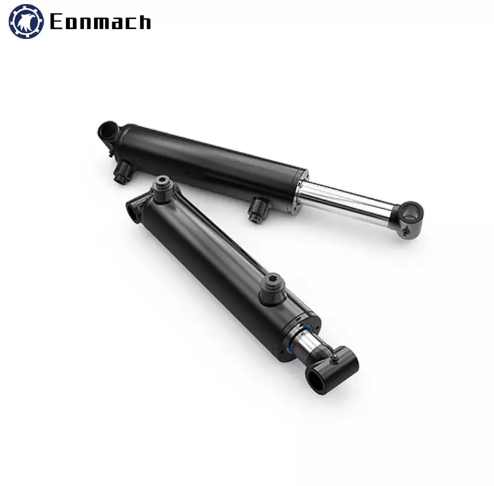
Hydraulic cylinders work by turning fluid pressure into powerful mechanical motion. This process starts when hydraulic fluid, usually oil, is pumped into the cylinder. The fluid fills one side of the piston chamber, creating pressure that pushes the piston. This pressure forces the piston rod to extend or retract, moving whatever load is attached.
The journey begins at the hydraulic pump, which pushes fluid from a reservoir into the cylinder. The fluid is pressurized as it enters the cylinder chamber. This pressurization is crucial because the force the cylinder generates depends on the fluid pressure. Higher pressure means more force.
The fluid volume also matters. More fluid flowing into the cylinder means the piston moves farther or faster. The pump and system design control both pressure and flow volume to match the task’s needs.
Valves act like traffic controllers for hydraulic fluid. They decide where the fluid goes inside the cylinder, controlling whether the piston extends or retracts. Directional control valves switch fluid flow between chambers on either side of the piston.
Pressure relief valves protect the system by releasing excess pressure, preventing damage. Check valves ensure fluid flows in the right direction without backflow.
The reservoir stores hydraulic fluid when not in use and helps cool and filter it. It also compensates for fluid volume changes as the piston moves.
Once pressurized fluid enters a chamber, it pushes against the piston’s surface. Because the fluid is trapped and incompressible, the pressure applies force evenly. This force moves the piston inside the cylinder barrel.
The piston rod connected to the piston translates this movement outside the cylinder, performing work like lifting, pushing, or pulling.
The force the piston exerts depends mainly on two factors:
Fluid Pressure (P): The higher the pressure, the greater the force.
Piston Surface Area (A): The larger the area the fluid pushes against, the more force is generated.
The relationship is simple:
Force (F) = Pressure (P) × Area (A)
For example, if fluid pressure is 1500 psi and the piston face area is 5 square inches, the piston force is 7,500 pounds.
Other factors also influence performance, such as fluid temperature, seal condition, and cylinder design. Maintaining clean fluid and properly functioning valves ensures smooth, efficient operation.
Hydraulic cylinders come in various types, each designed for specific tasks and applications. Understanding these types helps in choosing the right cylinder for your needs and ensures efficient operation.
Single acting cylinders use hydraulic pressure on only one side of the piston. This pressure extends the piston rod, creating force in one direction. To return the piston, external forces like springs or gravity are used. This design is simple and cost-effective.
Typical uses include:
Lifting jacks, where gravity pulls the piston back after lifting.
Presses that only need force in one direction.
Applications with a guaranteed return load.
Single acting cylinders are ideal when only one-way force is required, and the return motion can rely on external factors.
Double acting cylinders apply hydraulic pressure alternately to both sides of the piston. This allows the piston rod to extend and retract under hydraulic power, providing force in both directions. This design offers greater control and versatility.
Advantages include:
Precise control over both extension and retraction.
Ability to perform continuous push and pull actions.
Enhanced efficiency for complex machinery.
They are commonly used in industrial equipment, construction machinery, and applications where controlled motion in both directions is critical.
| Aspect | Single Acting Cylinder | Double Acting Cylinder |
|---|---|---|
| Operation | Pressure on one side only | Pressure alternates on both sides |
| Return Mechanism | External forces like springs or gravity | Hydraulic pressure controls both movements |
| Complexity | Simple design, fewer ports | More complex, requires ports on both ends |
| Typical Applications | Simple lifting, pressing tasks | Industrial machinery, automated systems |
| Efficiency | Efficient for one-way tasks | Efficient for continuous, two-way operations |
Choosing between them depends on the task. Single acting cylinders suit simple jobs with one-direction force. Double acting cylinders fit applications needing force both ways.
Beyond the basic types, specialized hydraulic cylinders handle unique challenges:
Telescopic Cylinders: Have multiple nested stages. They extend much farther than their collapsed length. Used in dump trucks and cranes where long strokes are needed but space is limited.
Tandem Cylinders: Two or more cylinders connected to increase force output. Useful when very high force is required beyond a single cylinder’s capacity.
Through Rod Cylinders: Feature a rod passing through both ends. This design balances forces and is used in applications requiring equal force in both directions.
Plunger Cylinders: Have no piston seals and rely on the rod's diameter for force. Used in simple lifting applications.
Each specialized cylinder type meets specific operational needs, making them valuable in fields like construction, agriculture, and heavy machinery.
Hydraulic cylinders rely on two key elements to function properly: the hydraulic fluid and the pump that moves it. Without these, the system can’t create the pressure needed to move the piston and generate force.
Hydraulic fluid is the lifeblood of the system. It transmits pressure and lubricates the moving parts inside the cylinder. Choosing the right fluid depends on the application, environment, and performance needs. Here are the main types:
Mineral-based oils: These are the most common. They offer good lubrication, are affordable, and work well in general industrial settings.
Synthetic oils: These fluids handle extreme temperatures and resist chemical breakdown better than mineral oils. They last longer and suit high-performance or harsh environments.
Water-based fluids: Used where fire safety is critical, such as mining or steel plants. They have lower flammability but may need more maintenance due to corrosion risks.
Each fluid type has specific properties like viscosity, temperature range, and compatibility with seals. Using the wrong fluid can cause leaks, wear, or system failure.
Selecting fluid depends on factors such as:
Temperature conditions: Synthetic oils excel in extreme heat or cold.
Pressure requirements: Some fluids maintain pressure better under high loads.
Environmental concerns: Water-based fluids reduce fire risk but may require corrosion inhibitors.
Machine compatibility: The fluid must not degrade seals or components.
Consulting manufacturer guidelines and testing fluid compatibility ensures optimal performance and longevity.
The pump pressurizes and moves the hydraulic fluid into the cylinder. Different pumps suit different needs:
| Pump Type | Description | Suitable Applications |
|---|---|---|
| Gear Pump | Uses meshing gears to move fluid. Simple and durable. | General industrial machinery needing steady flow. |
| Vane Pump | Contains rotating vanes, quieter operation. | Noise-sensitive environments, light machinery. |
| Piston Pump | Uses pistons driven by a rotating shaft for high pressure. | Heavy-duty machinery requiring variable flow and pressure. |
| Clutch Pump | Has a clutch to engage/disengage pump operation. | Systems needing intermittent fluid flow control. |
The pump’s efficiency impacts the cylinder’s speed, force, and smoothness. For example:
A gear pump provides consistent flow but may be noisy.
A piston pump handles high pressure and variable flow, ideal for demanding tasks.
A vane pump offers quieter operation but lower pressure capacity.
A clutch pump allows precise control over when fluid is pumped, saving energy.
Choosing the right pump balances performance, noise, energy use, and cost.
Hydraulic cylinders are powerful, but they need regular care to keep running smoothly. Maintenance helps avoid breakdowns and costly repairs. Knowing common problems and how to spot them early saves time and money.
Leaks are the most frequent problem. They usually happen when seals wear out or get damaged. Leaking fluid reduces pressure, so the cylinder loses power and efficiency. Pressure irregularities can cause jerky or slow piston movements. These may result from air in the system, faulty pumps, or clogged filters. Wear affects parts like the piston rod and cylinder barrel, leading to scratches or scoring that harm seals and cause leaks.
Good maintenance starts with inspecting seals, rods, and barrels regularly. Replace worn or cracked seals promptly. Keep hydraulic fluid clean and at the right level; contaminated fluid can damage components and reduce performance. Change filters as recommended by the manufacturer. Lubricate moving parts to reduce friction and wear. Also, check for loose fittings or damaged hoses and tighten or replace them as needed. Regularly test system pressure to ensure it stays within the proper range.
Watch for these warning signs:
Visible fluid leaks around seals or fittings.
Slow or uneven piston movement.
Unusual noises like knocking or whining.
Excessive heat from the cylinder or fluid.
Reduced force output or failure to hold position.
Sudden drops in system pressure.
Early detection allows you to fix issues before they cause major damage or downtime.
Operate cylinders within their rated pressure and load limits. Avoid sudden starts and stops, which stress components. Use the correct hydraulic fluid type and change it as scheduled. Train operators to recognize problems and report them quickly. Always relieve system pressure before performing maintenance to prevent accidents. Keep the work area clean to avoid dirt entering the system.
Tip: Schedule routine inspections focusing on seals, fluid condition, and pressure levels to catch leaks and wear early, ensuring safe and efficient hydraulic cylinder operation.
Hydraulic cylinders are powerful tools that offer many benefits but also come with some challenges. Understanding both sides helps users get the best from these devices.
Power Density: Hydraulic cylinders generate huge force relative to their size. This makes them perfect for tight spaces needing strong pushing or pulling power.
Precision Control: They allow smooth, accurate movements. Operators can control speed and force finely, which is vital in manufacturing and heavy machinery.
Durability: Built tough, these cylinders handle harsh environments and heavy loads. They last long when maintained properly.
Compact Design: Despite their strength, hydraulic cylinders are often small and fit easily into machines. This saves space and allows sleek designs.
These advantages explain why hydraulic cylinders are widely used in industries like construction, agriculture, and manufacturing.
Leakage Risks: Seals can wear out, causing fluid leaks. Leaks reduce efficiency and can harm the environment if fluid spills.
Maintenance Requirements: Regular checks are necessary to replace seals, keep fluid clean, and inspect parts. Neglect leads to breakdowns.
Cost: Hydraulic systems can be expensive upfront due to pumps, cylinders, valves, and installation.
Complexity: The system involves many parts needing skilled design and repair.
Despite these limits, proper care and quality components can minimize issues.
Fluid leaks pose environmental hazards, especially if fluids are not biodegradable.
Temperature changes affect fluid viscosity, impacting performance.
Noise and energy consumption vary depending on pump and system design.
Safe handling and disposal of hydraulic fluids are essential.
Manufacturers increasingly develop eco-friendly fluids and better seals to address these concerns.
Use high-quality seals and replace them regularly to prevent leaks.
Choose the right hydraulic fluid for your climate and application.
Schedule routine maintenance for fluid checks, filter changes, and system inspections.
Train operators on safe handling and early problem detection.
Opt for energy-efficient pumps and components to reduce noise and costs.
By addressing these factors, users can enjoy the full benefits of hydraulic cylinders while minimizing downtime and environmental impact.
Hydraulic cylinders transform fluid pressure into strong, controlled mechanical movement, making them indispensable across a wide range of industries. Their accuracy and long-lasting performance are especially important in fields like construction and manufacturing. With ongoing technological advancements, hydraulic cylinders are continuously improving to handle more complex and demanding applications with greater efficiency. A clear understanding of how they work can help maximize performance and simplify maintenance. EONMACH provides premium hydraulic cylinder solutions built for reliability and high performance, offering innovative products and professional support for various industrial needs.
A: Hydraulic cylinders are devices that convert fluid pressure into mechanical force and movement using Pascal's Law. Pressurized hydraulic fluid pushes a piston inside the cylinder, creating powerful, controlled motion.
A: Hydraulic cylinders provide high power density and precise control in a compact design, making them ideal for lifting and pushing heavy loads efficiently.
A: Prices vary based on size, type, and application, but factors like quality seals and pumps influence the overall cost of hydraulic cylinders.
A: Leaks, pressure drops, and wear are common. Regular seal inspection, fluid maintenance, and pressure checks help troubleshoot and prevent failures.
A: Single acting cylinders apply pressure on one side for one-way force, while double acting cylinders use pressure on both sides for controlled two-way motion.