You can find hydraulic cylinders in many places. They are used at construction sites and in factories. The global market for hydraulic cylinders was USD 14.4 billion in 2024. It may reach USD 19.4 billion by 2033. The market is growing at a steady rate. Picking the right hydraulic cylinder means knowing about new trends. Many industries use intelligent control systems now. They also use lightweight parts and hybrid technologies. These help improve performance and safety.
Trend | Description |
|---|---|
Hydraulic Automation | New technology makes things better and faster. |
Intelligent Control Systems | AI helps make machines work smarter and save energy. |
Sustainability | Better designs stop leaks and use less energy. |
Hybrid Hydraulics | Electric and hydraulic systems work together for better results. |
Lightweight Components | Smaller parts fit into tight spaces. |
High Performance Lubricants | Special lubricants help hydraulic systems last longer. |
Hydraulic System Safety | Safety features keep people and machines safe. |
Know what your job needs. Think about where you will use it, how much weight it must lift, and how much space you have before picking a hydraulic cylinder.
Pick the right kind of cylinder. Tie rod cylinders are simple to fix. Welded cylinders are stronger for hard work.
Choose good materials and seals. Strong materials and good seals help the cylinder last longer and work better in different places.
Make a checklist to help you choose. Ask important questions about pressure, size, and how you will mount it. This helps make sure the cylinder is right for your job.
Talk to EONMACH experts. They can help you not make mistakes. They will help you pick the best hydraulic cylinder for your job.
First, think about where you will use the hydraulic cylinder. Each job has its own needs. Construction, farming, factories, and boats all have different problems. EONMACH has worked in many fields. They can help with almost any job. Check the environment. Cold weather makes fluid thick and slows things down. Hot weather can make leaks and odd movements happen. Humid air can cause rust. Chemicals can hurt the cylinder. Here is a table that shows how the environment changes how the cylinder works:
Environmental Factor | Impact on Hydraulic Cylinder Performance |
|---|---|
Temperature (Cold) | Slows operation, increases strain |
Temperature (Hot) | Causes leaks, erratic movement |
Humidity | Causes corrosion |
Chemical Exposure | Damages cylinder, leads to failure |
You need to match the cylinder to the weight and space you have. Figure out the force by looking at weight, friction, and safety. Make sure the cylinder fits in the space you have. Stroke length tells you how far the cylinder moves. The rod size must be strong enough not to bend. Pick the right way to mount the cylinder for safety. Here are some good tips:
Know the load and the environment.
Add safety margins when you design.
Pick a mounting style that fits your setup.
Measure space to pick the best cylinder.
Check and fix the cylinder often.
EONMACH has cylinders for many uses, like car lifts and farm machines. You can trust their advice to help you pick the right one.
Today’s jobs need good control and safe load holding. Joysticks and sensors help you be more exact. Smart systems watch how things work all the time. Cylinder heads now have pressure and temperature sensors. Wear signs help you know when to fix things. Load holding parts keep loads safe, even if the hydraulics fail. They hold things in place without always using pressure. These parts make your job safer and better.
Tip: Ask EONMACH’s experts for help so you do not make mistakes like slow work or hard setups. Their wide experience helps you pick the best hydraulic cylinder for your job.
You need to know about tie rod and welded cylinders. Tie rod cylinders use steel rods to keep parts together. Welded cylinders have parts joined by welding. The table shows how they are different:
Feature | Tie Rod Cylinders | Welded Cylinders |
|---|---|---|
Maintenance Ease | Easier to take apart for fixing | Harder to fix because of welded parts |
Strength and Durability | Not as strong as welded cylinders | Very strong and good for tough jobs |
Customization | Can be changed in many ways | Not easy to change because of welded design |
Application Suitability | Good for places needing repairs often | Great for moving machines and tough work |
Seal Integrity | Uses regular seal kits | Uses special seals for better work |
Tie rod cylinders are good if you need to fix them often. Welded cylinders are best for hard jobs and moving machines. You should pick the type that fits your work.
Some jobs need special hydraulic cylinders. You must pick the right one for your work. Here are some examples:
Industrial OEMs use custom cylinders for cranes and presses.
Forestry needs strong cylinders for skidders and tree trimmers.
Agriculture uses cylinders with sensors for combines and sprayers.
Construction and mining need tough cylinders for rough places.
Rail uses strong cylinders for rail grinding and safety.
Think about what your job needs before picking a hydraulic cylinder.
EONMACH has many hydraulic cylinders for different jobs. The table shows how their products help:
Industry Sector | Application Description |
|---|---|
Agriculture | Used in tractors, harvesters, and plows for lifting and lowering. This helps work go faster. |
Construction & Engineering | Powers excavators and forklifts. They are made for heavy loads and long use in busy places. |
Logistics & Lifting Systems | Used in dock levelers and truck lifts for changing height and working well. |
Special Vehicles & Equipment | Used in garbage trucks and medical beds. They focus on safety and good control. |
If you want to pick the best hydraulic cylinder, you can ask EONMACH for help. Their many products can solve lots of problems in different jobs.
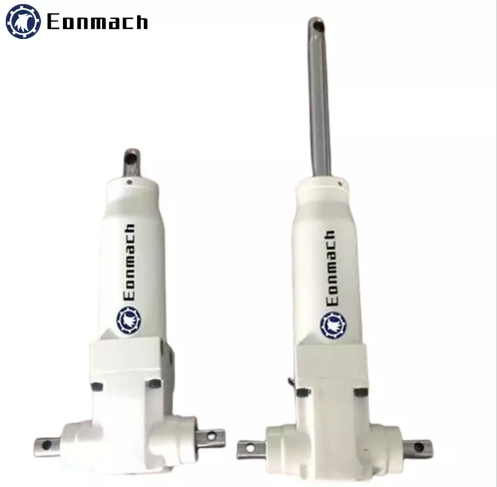
You must choose the right size of the bore and rod for your hydraulic cylinder. The bore is the inside width of the cylinder where the piston moves. The size of the bore affects how much force the cylinder can create. A larger bore gives more power. You also need to pick the correct rod. The rod connects to the piston and moves in and out. If you use a rod that is too small, it can bend or break. If you use a rod that is too large, it may not fit your space. You can use these formulas to help you:
Formula Description | Formula |
|---|---|
Extend Area (in²) | π * Bore Diameter (in)² / 4 |
Extend Force (lbs) | Extend Area (in²) * Pressure (psi) |
Retract Area (in²) | π * (Bore Diameter (in)² – Rod Diameter (in)²) / 4 |
Retract Force (lbs) | Retract Area (in²) * Pressure (psi) |
If you need help, you can ask EONMACH’s engineers for advice. They can help you pick the best bore and rod for your job.
You need to know how much force your cylinder must create. Follow these steps:
Find the pressure in your system. This is usually in psi.
Measure the bore diameter of your cylinder.
Use the formula for the area of a circle to find the area.
Multiply the pressure by the area to get the force.
This helps you find the right size of the bore for your work. Always check charts and ask experts if you are not sure.
The stroke length tells you how far the rod can move. A longer stroke length lets your machine lift or push things farther. In mining and other tough jobs, a longer stroke length helps your equipment work better and last longer. You should always match the stroke length to your needs. If you pick the wrong stroke length, your machine may not work well.
Tip: Always check your measurements and talk to EONMACH if you have questions. The right bore, rod, and stroke length will help your hydraulic cylinder last longer and work better.
You need to pick the right mounting style. The mounting style helps keep your system safe and steady. Here are some common ways to mount a hydraulic cylinder:
Flange mounting is good for setups that do not move. It keeps the cylinder small. If the cylinder sticks out too far, it can wobble.
Foot or lug mounting puts the cylinder right on the base. This stops the cylinder from bending. It works well when the cylinder is sideways.
Head flange mount gives a strong hold. You can use it for heavy jobs.
Double flange mount has flanges on both ends. This makes the cylinder extra steady.
Trunnion mount lets the cylinder turn. It helps when you need to change the angle.
Pick the mounting style that fits your job. This helps the rod move well and keeps things safe.
Choosing the right materials makes the cylinder last longer. You need strong materials for the rod and other parts. Look at this table for some common choices:
Material Type | Properties/Applications |
|---|---|
Stainless Steel | Resists corrosion, good for food and marine jobs |
Alloy Steel | Handles high pressure, resists fatigue |
Advanced Alloys | Works under extreme loads |
Specialized Coatings | Hard chrome or PTFE, lowers wear and friction |
Stainless steel is good for wet or salty places. Alloy steel is strong and works with high pressure. Special coatings help stop wear and make the rod last longer.
Seals keep the fluid inside and block dirt. New seal designs help you do less maintenance. Plateau honing makes the inside of the cylinder smooth. This helps seals last longer and lets the rod move better. Nikasil and composite coatings make the rod harder and stop rust. Sensors can check pressure and temperature. This helps you fix problems before they get worse. HNBR seals work in tough places and stay flexible.
Tip: Check your seals often. Clean the rod and look for damage. This helps your hydraulic cylinder last longer.
You need a simple checklist to pick the right hydraulic cylinder. This helps you not make mistakes. It also makes sure your cylinder fits your job. Start by asking yourself some questions. What will you use the cylinder for? How much room do you have for it? What forces will the cylinder need to handle? How heavy is the thing you want to move? How far does the cylinder need to go? What hydraulic fluid should you use? What temperatures will the cylinder face? How will you put the cylinder in place? What job does the cylinder need to do? Do you want single acting or double-acting types? What is the most weight the cylinder must lift? Should you use steel or aluminum for your area?
Check each question before you choose. Experts say a checklist helps you avoid mistakes. It also helps you match the cylinder to your needs.
Think about how much pressure and speed you need.
Check if you need the cylinder to work in hot places.
Look at the fluid and if chemicals are around.
Think about the weather and where you will use it.
Pick the best seal material and design.
Look at the cylinder’s surface and how smooth it is.
Make sure the seals work well with other parts.
Plan for what your job needs.
Make a plan to keep the cylinder working well.
Tip: Write your answers down. This makes it easier to pick and compare cylinders.
You also need to pick single acting or double-acting types. Single acting uses pressure on one side. Double-acting uses pressure on both sides for better control. Always check the highest pressure your system can handle. This keeps your cylinder safe and working well.
You want your hydraulic cylinder to last a long time. EONMACH can help you do this. The company gives you help with design and buying. They guide you through every step.
EONMACH engineers help you pick the right cylinder for your job. They look at pressure, weight, and the place you will use it. You get advice on how to mount it and what material to use. EONMACH checks if you need special seals or coatings.
Check your checklist before you buy. Make sure the cylinder fits your needs. Look at the bore, rod, stroke, and how you will mount it. Check the pressure and the highest pressure it can take. Pick the right material and seal. Plan for how you will take care of it and what you might need later.
Step | What to Check |
|---|---|
Application | Job, place, how you will use it |
Space | Size, how to mount |
Force | Pressure, most weight it can lift |
Stroke | How far, how exact, holding loads |
Material | Steel, aluminum, coatings |
Seals | Material, design, how to care for them |
Maintenance | Plan, how often, who will help |
Callout: EONMACH helps you at every step. Their experience helps you find the best hydraulic cylinder for your job.
When you pick the right hydraulic cylinder, your work gets easier. Custom cylinders help machines work better and fit special places. They also help you save money. You need to follow steps to choose well. First, look at what you need. Then pick the type, size, mounting, materials, and seals. EONMACH gives strong power, good control, long life, and great seals.
Key Factor | Description |
|---|---|
Reliable Power | Works well in many jobs and keeps going |
Precision | Lifts smoothly and puts things in the right spot |
Durability | Made with tough materials to last a long time |
Ask EONMACH for help. They give smart advice and good hydraulic choices.
A hydraulic cylinder helps move or lift heavy things. It turns fluid power into force that moves parts. Many machines need hydraulic cylinders to work well and safely.
You need to check the weight you want to move. Look at how far the cylinder needs to go. Make sure you have enough space for the cylinder. Pick a cylinder that fits your project. EONMACH experts can help you find the best one for lifting and pulling.
Yes, you can use hydraulic cylinders in very hot or cold places. Pick the right materials and seals for these jobs. Stainless steel and special coatings help keep the cylinder safe from harm.
Check your cylinder every month. Clean the rod and look for leaks or damage. Doing this often helps your cylinder last longer.
You can ask EONMACH for help. Their team will help you pick the right cylinder for your job. You can visit their website or call them for support.